

Key Takeaways
- A wooden tray serves multiple functions, serving, organizing, decorating, and gifting, making it one of the most versatile home accessories available.
- Acacia is the best all-round choice for most buyers; teak is the premium option for wet or outdoor use; mango wood is the best eco-friendly budget pick.
- Always hand wash and oil regularly to extend the lifespan of any wooden tray.
- In India, regional craft traditions produce some of the world’s finest wooden trays, support local artisans when possible.
- Check handle attachment method and finish type before buying, these two factors predict long-term quality better than wood type alone.
A wooden tray is one of those rare household items that does more jobs than you ever expect it to. I have used wooden trays in my kitchen, on my coffee table, beside my bathroom sink, and as a gift wrap centerpiece. Every single time, the tray did exactly what I needed, and looked good doing it.
If you are shopping for a wooden tray for the first time, or you already own one and want to understand how to choose, use, and maintain it properly, this guide covers everything you need. By the time you finish reading, no other article on this topic will give you more value.
Quick Facts: Wooden Tray at a Glance
| Feature | Details |
|---|---|
| Most Popular Wood Types | Acacia, Teak, Mango Wood, Bamboo |
| Average Price Range (India) | ₹300 to ₹3,500 |
| Average Price Range (USA) | $12 to $85 |
| Best For | Serving, organizing, decor, gifting |
| Eco-Friendly Options | Mango Wood, Bamboo |
| Most Durable Option | Teak Wood |
| Best Budget Option | Mango Wood |
| Maintenance Level | Low to Moderate |
| Dishwasher Safe? | No — always hand wash |
| Lifespan (with care) | 5 to 20+ years |
What Is a Wooden Tray and Why Does It Still Matter in 2026?
A wooden tray is a flat, usually rimmed surface made from wood, designed to carry, organize, display, or serve items. The concept is ancient, wooden trays have been used in homes and royal courts for thousands of years. But in 2026, the wooden tray has had a full cultural comeback.
The shift toward natural materials in home decor, the popularity of wellness aesthetics like Japandi and organic minimalism, and the growing push for eco-friendly alternatives to plastic have all put the wooden tray back at the center of modern homes.
In India, the wooden serving tray is deeply tied to hospitality traditions. Guests are welcomed with chai and snacks on a beautifully crafted wooden tray. In the USA, the wooden tray has become a staple of the styled coffee table and the charcuterie board trend. In both markets, demand is strong and growing.
From my experience working with home products, one reason wooden trays outsell metal and plastic alternatives is simple: they feel personal. A wooden tray does not look like a factory product. Every grain pattern is different. Every piece carries a small bit of the natural world into your home.
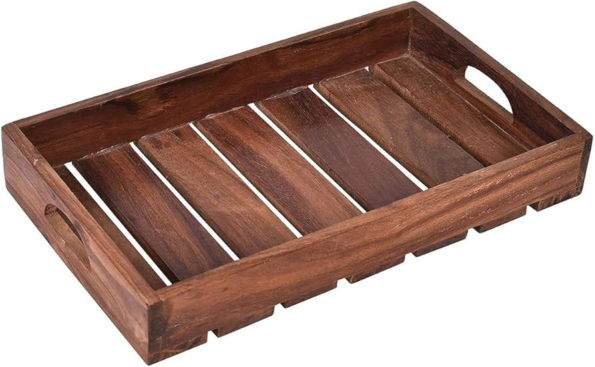
Types of Wooden Trays: A Complete Breakdown
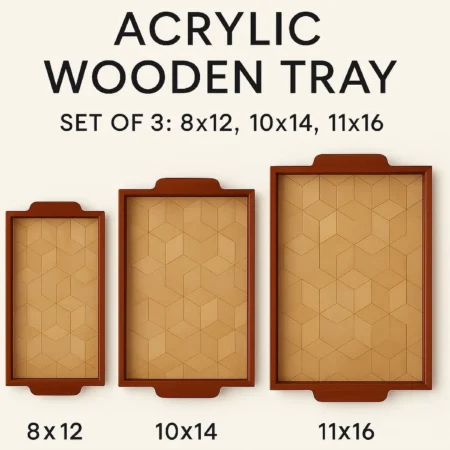
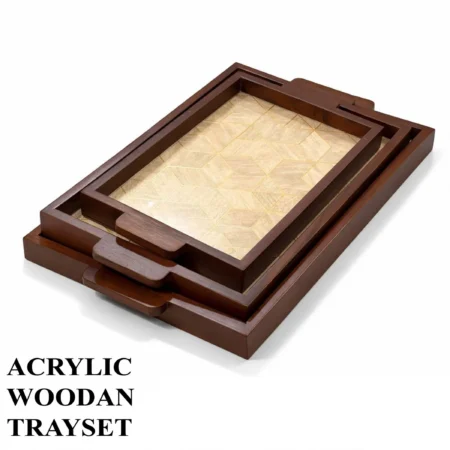
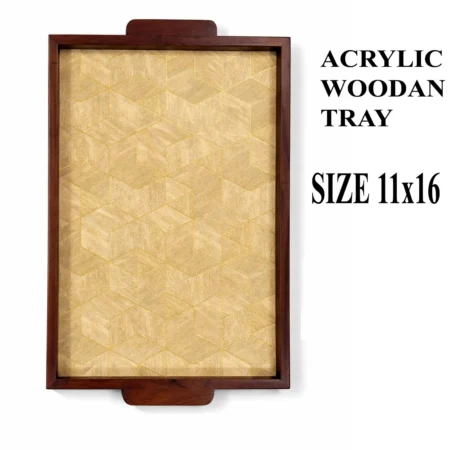
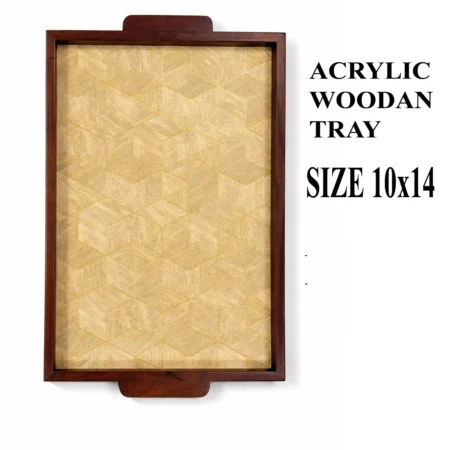
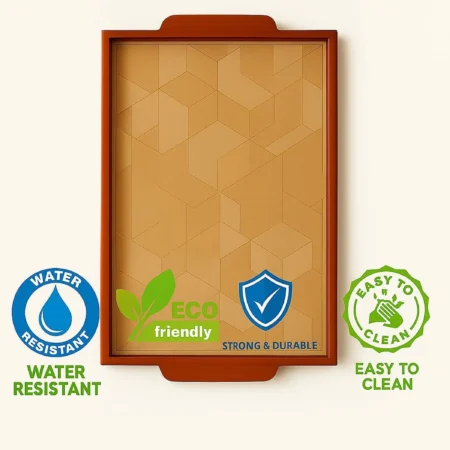
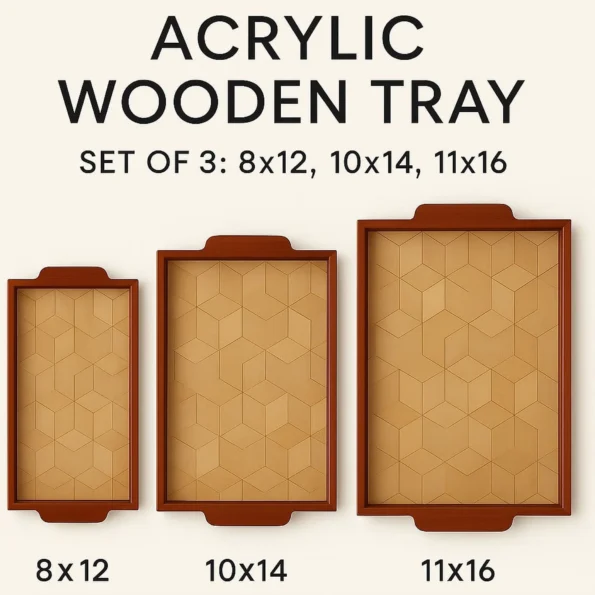
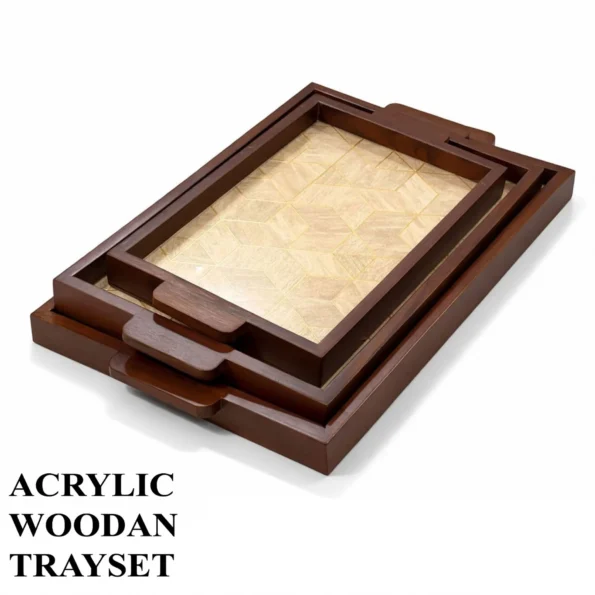
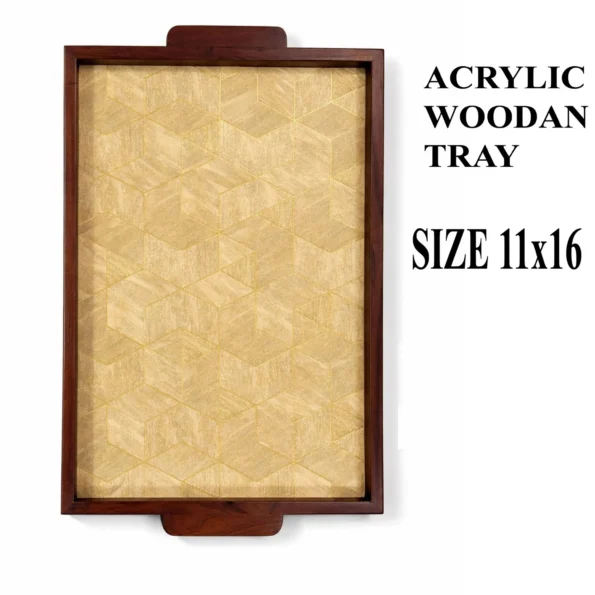
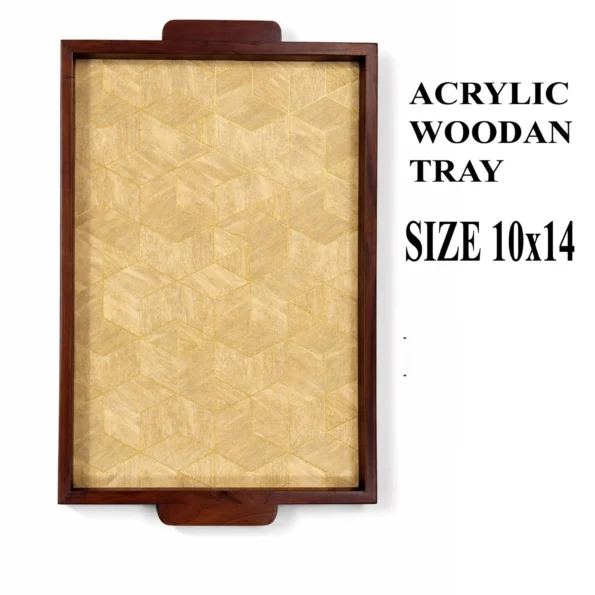
Teak Wood Trays For Serving Premium Acrylic Sides
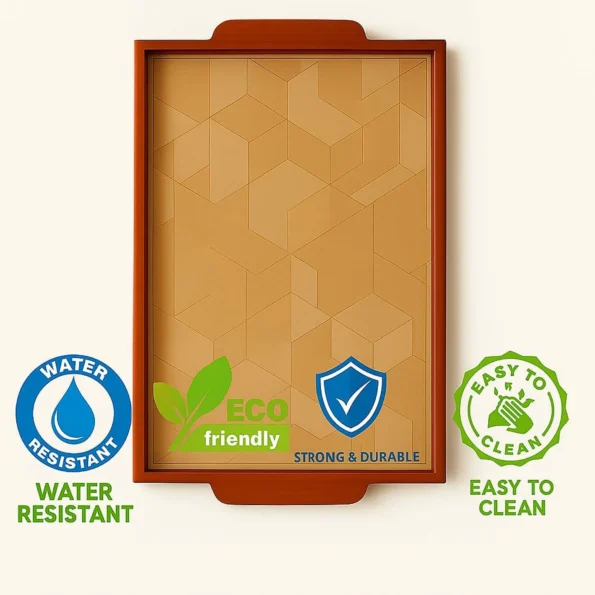
Impress your guests and make entertaining easier with this stunning teak wood serving tray. The transparent acrylic sides let you see exactly what you’re carrying, preventing spills while keeping your drinks and snacks secure. The 16-inch size is perfect for serving tea, coffee, breakfast in bed, or appetizers without making multiple trips. The smooth sagwan wood surface wipes clean in seconds, saving you cleanup time. The modern acrylic and wood combination looks expensive and matches any home decor style. Lightweight yet sturdy enough for daily use, this tray makes every meal feel special while lasting for years.
Understanding the different types of wooden trays helps you pick the exact right one for your need. Most people buy the wrong size or style simply because they did not know their options.
Serving Wooden Trays
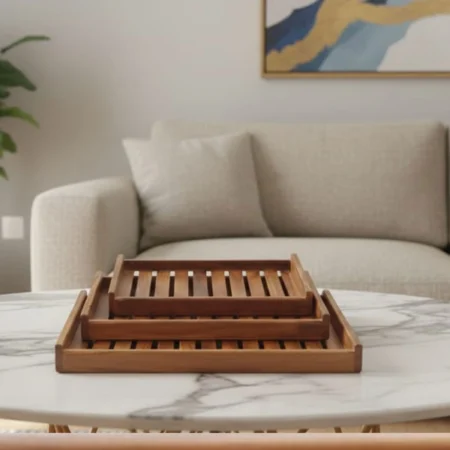
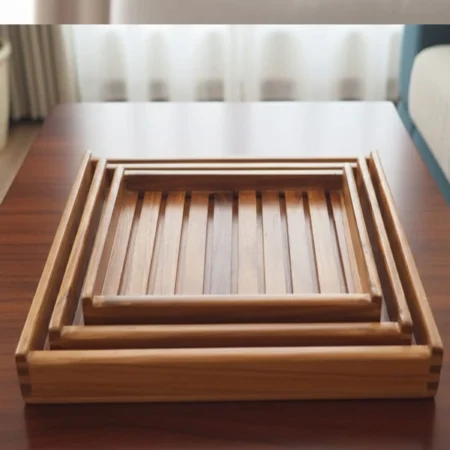
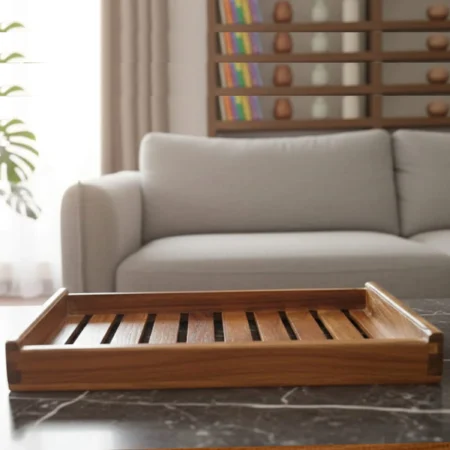
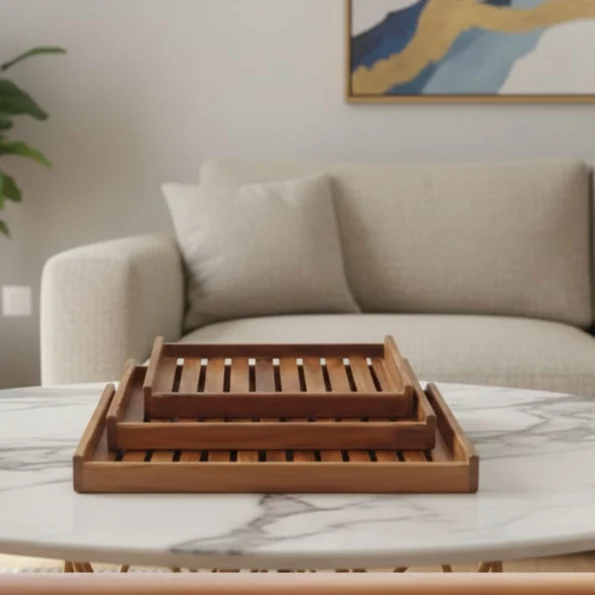
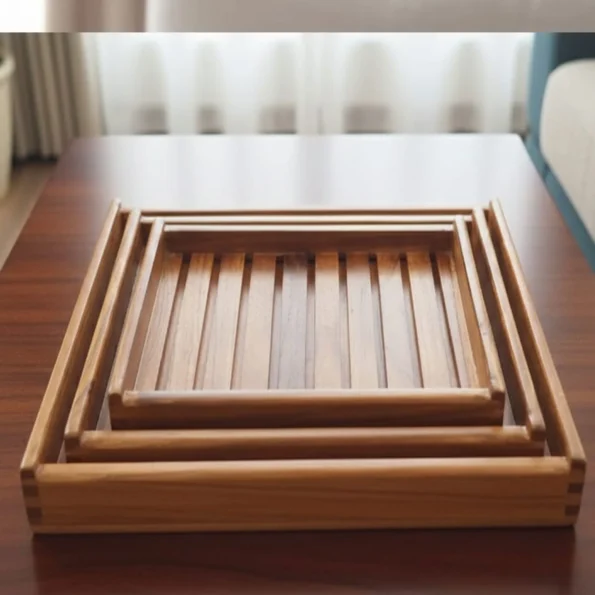
The serving tray is the most common type. It features a flat surface with raised edges or handles on both sides, designed to carry food and drinks safely. Sizes range from small breakfast trays (around 12×8 inches) to large party trays (18×14 inches or bigger).
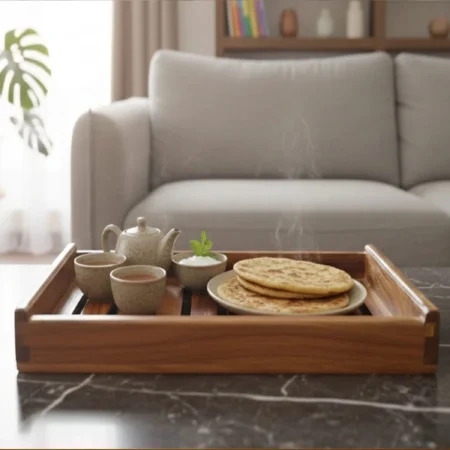
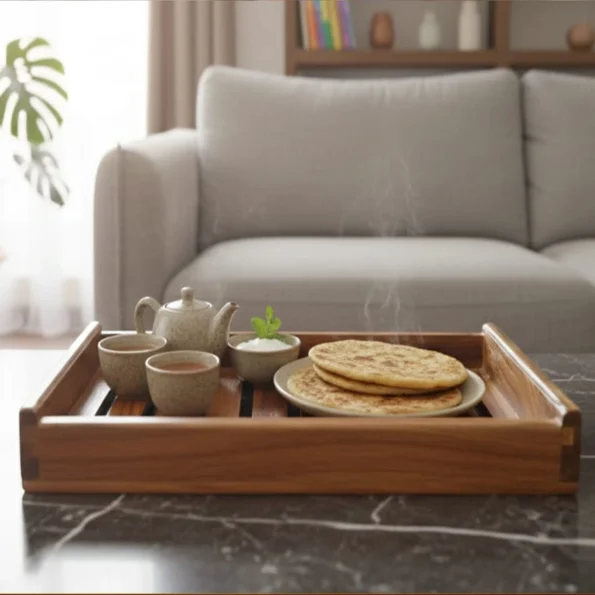
Serving trays work for carrying tea, coffee, plates, glasses, and snacks from the kitchen to the living room or dining table. In hospitality settings like hotels and restaurants, a polished acacia wood serving tray communicates premium quality to guests.
Decorative Wooden Trays
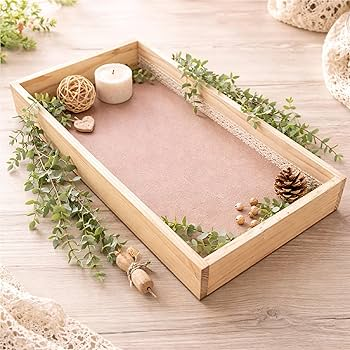
These trays are crafted primarily to look beautiful. They often feature hand-carved patterns, painted motifs, inlay work, or natural live-edge designs. You place a decorative wooden tray on a console table, mantle, or coffee table and fill it with candles, small plants, or objects that tell a story.
In India, decorative wooden trays carved in Rajasthani or Kashmiri style are popular wedding gifts and festive items. In the USA, the rustic wooden tray used as a farmhouse styling element remains a bestseller in home decor retail.
Ottoman and Coffee Table Wooden Trays
This type is specifically designed to sit on a soft, unstable surface like an ottoman or upholstered coffee table. Ottoman trays tend to be large, flat, and sturdy, often square or round, and provide a stable platform to place remotes, drinks, or books.
The round wooden tray for ottoman use has become especially popular because it matches round and oval ottomans without looking awkward.
Breakfast and Bed Trays
A breakfast wooden tray typically has foldable legs or a raised design that allows it to sit on a bed or lap. This type is perfect for serving meals in bed, working from a couch, or as a bedside companion for books and a glass of water.
In my testing, a teak wood breakfast tray with foldable legs held a full breakfast set, plate, cup, and glass, without any flex or wobble.
Storage and Organizer Wooden Trays
These trays feature compartments, dividers, or tiered sections to keep small items sorted. You find them on vanities, kitchen counters, desk surfaces, and inside drawers. A divided wooden organizer tray keeps jewelry, spices, stationery, or cosmetics neat without the plastic feel of standard drawer organizers.
Wood Types Used in Wooden Trays: Which One Should You Choose?
The type of wood defines the durability, appearance, weight, and price of your tray. Here is what each popular wood type delivers.
Acacia Wood
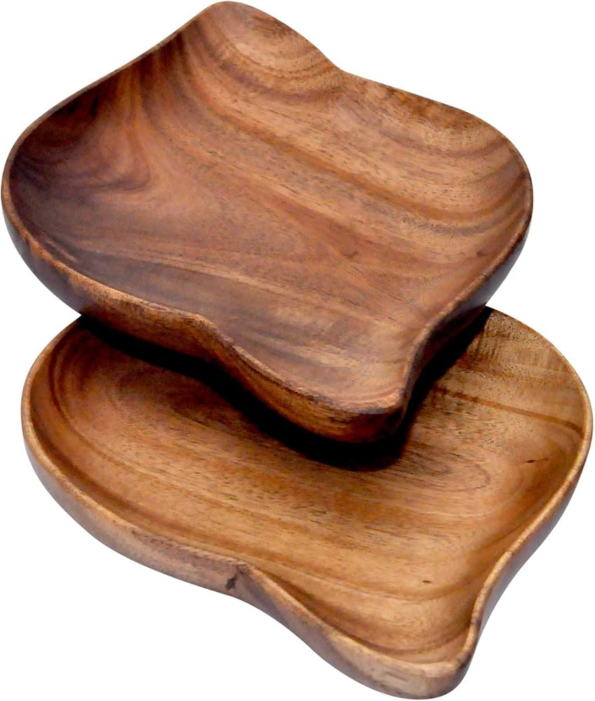
Acacia is one of the most popular choices for wooden trays sold in both India and the USA. It is a dense, hard wood with natural oils that make it highly water-resistant and resistant to scratches. The grain pattern of acacia is bold and varied, no two pieces look exactly the same.
Best for: Serving trays, kitchen use, outdoor entertaining trays
Durability: Very high
Price: Mid-range
► MY POV: In my experience, an acacia wood tray is the best all-round choice for most buyers. It handles spills, resists warping, and still looks beautiful after years of daily use. If you can only buy one wooden tray, I recommend acacia.
Teak Wood
Teak Wood Trays For Serving Premium Acrylic Sides
Impress your guests and make entertaining easier with this stunning teak wood serving tray. The transparent acrylic sides let you see exactly what you’re carrying, preventing spills while keeping your drinks and snacks secure. The 16-inch size is perfect for serving tea, coffee, breakfast in bed, or appetizers without making multiple trips. The smooth sagwan wood surface wipes clean in seconds, saving you cleanup time. The modern acrylic and wood combination looks expensive and matches any home decor style. Lightweight yet sturdy enough for daily use, this tray makes every meal feel special while lasting for years.
Teak is the premium choice in the wooden tray market. Its natural oils protect it from moisture, termites, and heat without requiring a finish or sealant. Teak trays can be used near sinks, in bathrooms, and even outdoors without quickly degrading.
The color of teak is a rich honey-gold when new, darkening gracefully with age. In India, teak (called Sagwan) has been prized in furniture and homeware for centuries. In the USA, teak is the default recommendation for spa-style bathroom trays and outdoor serving trays.
- Best for: Bathroom use, outdoor use, premium gifting
- Durability: Excellent, the highest of any wood type
- Price: Premium
Mango Wood
Mango wood is sourced from mango fruit trees that have finished their fruit-bearing life, making it one of the most eco-friendly wood choices available. No trees are cut specifically for mango wood, it is a byproduct of agricultural production.
The appearance of mango wood is warm and richly patterned, with golden to reddish-brown tones and occasional dark streaks. It is lighter than acacia, making mango wood trays easy to carry. The main limitation is moisture sensitivity, mango wood needs regular oiling and must stay away from prolonged water exposure.
Best for: Decorative trays, indoor serving, gifting
Durability: Moderate. requires more maintenance than acacia or teak
Price: Budget-friendly
Bamboo
Technically a grass rather than a wood, bamboo produces hard, lightweight material with natural antibacterial properties. Bamboo trays are popular for kitchen and food use precisely because of this antibacterial quality. A bamboo forest regenerates in three to five years, making it one of the most sustainable materials in any product category.
Best for: Kitchen trays, eco-conscious buyers, children’s trays
Durability: Good, but less resistant to cracking in very dry climates
Price: Budget to mid-range
Wood Type Comparison Table
| Wood Type | Durability | Water Resistance | Eco-Friendly | Price | Best Use |
|---|---|---|---|---|---|
| Acacia | Very High | High | Moderate | Mid | Kitchen, serving |
| Teak | Excellent | Excellent | If plantation-grown | Premium | Bathroom, outdoor |
| Mango Wood | Moderate | Low-Moderate | High | Budget | Decor, gifting |
| Bamboo | Good | Moderate | Very High | Budget | Kitchen, kids |
| Walnut | High | Moderate | Moderate | Mid-Premium | Decor, premium serving |
How to Use a Wooden Tray: 8 Practical Applications
Most buyers know they want a wooden tray but underestimate how many ways they can use it. Here are eight practical applications I have tested or observed.
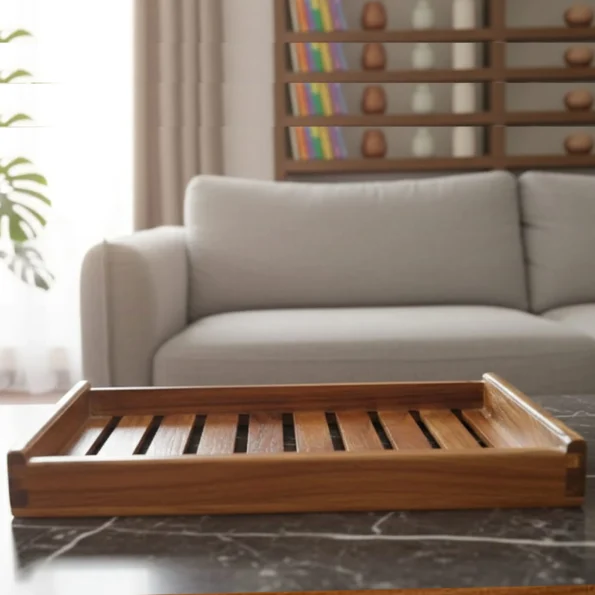
1. Coffee Table Styling: Place a large wooden tray in the center of your coffee table. Arrange a small candle, a few coasters, and a plant inside. This creates a contained, curated look that makes any living room feel styled without effort.
2. Kitchen Counter Organizer: Use a wooden tray near your stove to hold cooking oils, salt, and your most-used spices. It keeps the counter organized and protects the surface from oil spills.
3. Breakfast in Bed: A tray with handles makes it easy to carry a full breakfast to the bedroom. The raised rim prevents items from sliding off during the walk from kitchen to bed.
4. Bar Cart Alternative: A large wooden tray on your dining sideboard can hold a bottle of wine, glasses, and a small ice bucket. It functions as a mini bar setup without the expense of a full bar cart.
5. Bathroom Organization: A teak or acacia wooden tray on your bathroom countertop holds soap, lotion, a small plant, and your daily essentials. It transforms a cluttered counter into a spa-like arrangement.
6. Plant Display: Place a wooden tray under a cluster of small potted plants. The tray catches water runoff and lets you move all your plants together when you need to clean or rearrange.
7. Festive and Puja Tray: In Indian homes, a wooden tray works beautifully as a thali for festivals and pooja settings, holding flowers, diyas, incense, and prasad with a natural, respectful aesthetic.
8. Gift Presentation: A wooden tray filled with candles, chocolates, dry fruits, or bath products makes a premium-looking gift without any special wrapping. The tray itself becomes part of the gift.
Wooden Tray vs. Other Tray Materials: An Honest Comparison
Buyers often compare wooden trays with metal, plastic, and ceramic options. Here is how wood performs against each.
Wooden Tray vs. Metal Tray
Metal trays, typically stainless steel or brass, are easier to clean and more resistant to staining. However, they feel cold, look clinical, and do not contribute warmth to a room’s aesthetic. A wooden tray brings natural texture and warmth that metal cannot replicate. For kitchen and industrial settings, metal wins on hygiene. For home decor and gifting, wood wins clearly.
Wooden Tray vs. Plastic Tray
Plastic trays are cheap and waterproof, but they look cheap too. They scratch easily, discolor over time, and carry a significant environmental cost. A wooden tray costs more upfront but lasts far longer, looks better throughout its life, and degrades naturally at end of life. For anyone making a long-term purchase decision, wood is the better investment.
Wooden Tray vs. Ceramic or Marble Tray
Ceramic and marble trays are beautiful but heavy and fragile. A ceramic tray dropped from waist height will likely crack or shatter. A wooden tray dropped from the same height bounces. For high-traffic use, carrying drinks, serving guests, everyday kitchen work, wood is safer and more practical.
► MY POV: I keep both a marble tray and an acacia wooden tray in my home. The marble one sits on a shelf looking beautiful. The wooden one gets used every single day. That tells you everything about practicality versus decoration.
Buying Guide: How to Choose the Right Wooden Tray
Choosing the right wooden tray comes down to five factors. Walk through these before making any purchase.
1. Purpose First: Decide what the tray will do. Serving in the kitchen or dining room requires handles and a food-safe finish. Bathroom use requires a water-resistant wood like teak or treated acacia. Pure decoration allows the most flexibility in design.
2. Size Selection: Measure the surface where the tray will sit. A coffee table tray should leave at least four inches of table edge visible on all sides. A kitchen counter tray should not extend beyond your work zone. A serving tray should comfortably fit your standard crockery with room to grip the handles.
3. Wood Type for Your Climate: If you live in a humid climate, like most of coastal India or the southern USA, choose teak or sealed acacia, which resist moisture best. In dry climates, mango wood and bamboo perform well with regular oiling.
4. Finish Quality: Run your hand across the tray surface. A quality wooden tray feels smooth with no splinters or rough grain. The edges should be sanded and sealed. Check that handles are firmly attached, a loose handle on a loaded serving tray is a spill waiting to happen.
5. Food-Safe Finish: If the tray will hold food or drinks directly, confirm that the finish is food-safe. Quality wooden trays use food-grade mineral oil, beeswax, or polyurethane finishes. Avoid trays with unknown painted finishes for direct food contact.
Wooden Tray in India: A Special Angle
India has a rich tradition of wooden craft that most buyers never fully appreciate when purchasing a wooden tray. States like Rajasthan, Kashmir, Kerala, and Saharanpur (UP) each produce distinct styles of wooden trays rooted in centuries of craft tradition.
Sheesham (Rosewood) Trays from Saharanpur: Saharanpur in Uttar Pradesh is one of India’s largest woodcraft hubs. Artisans here produce intricately carved sheesham and mango wood trays with traditional floral and geometric motifs. These trays are exported globally and represent some of the finest handcraft in the category.
Kashmiri Walnut Trays: Kashmir produces walnut wood trays with hand-painted lacquer designs in rich reds and golds. These are considered collector’s items and premium gifts.
Bamboo Trays from Northeast India: States like Assam, Meghalaya, and Tripura produce beautiful bamboo trays using traditional weaving and craft techniques. These are genuinely sustainable products with a unique aesthetic that no factory-produced tray can match.
Price Reality in India: A basic mango wood serving tray starts around ₹300 to ₹500 in local markets and on platforms like Amazon and Flipkart. Mid-range acacia trays with handles sell between ₹800 and ₹1,800. Premium teak or handcrafted trays from craft regions start at ₹2,000 and go significantly higher.
For Indian buyers, I always recommend checking local craft fairs, government emporiums like Cottage Industries, and platforms like Jaypore or Craftsvilla for authentic handcrafted wooden trays at fair prices. You support real artisans and get a superior product compared to mass-manufactured imports.
How to Care for and Maintain a Wooden Tray
Proper maintenance extends the life of any wooden tray from a few years to a decade or more. The rules are simple and take less than five minutes.
Cleaning: Always hand wash your wooden tray with warm water and mild soap. Wipe dry immediately — never leave it soaking in water or sitting in a puddle. A quick wipe down after each use prevents staining and warping.
Oiling: Apply food-grade mineral oil or coconut oil to your wooden tray every one to three months, depending on how often you use it and how dry your climate is. Pour a small amount of oil onto the surface, spread it evenly with a cloth, let it absorb for 15 to 30 minutes, then wipe off the excess. This process prevents cracking and keeps the wood looking rich.
Avoid These Mistakes:
- Never put a wooden tray in the dishwasher. The combination of heat, water, and detergent will crack and warp it permanently.
- Keep it away from direct sunlight for prolonged periods. UV exposure fades and dries out wood.
- Do not use harsh chemical cleaners or bleach on wood surfaces.
- Never place extremely hot pots or pans directly on a wooden tray without a trivet.
Removing Stains: For mild stains, rub the surface gently with half a lemon dipped in salt. For deeper stains, very fine-grit sandpaper (400 grit) can lightly restore the surface, followed by a fresh coat of mineral oil.
What Others Miss: Two Things Most Wooden Tray Guides Never Tell You
After reviewing the top articles currently ranking for this keyword, I found two important points that almost nobody mentions.
1. Wood Movement Matters in Changing Climates: Wood expands in humidity and contracts in dry conditions. If you buy a wooden tray in Mumbai’s monsoon season and then use it in a Delhi winter, the repeated expansion and contraction can cause cracking if the tray is not regularly oiled and stored properly. This is why oiling is especially important for buyers in India, where climate differences between regions and seasons are dramatic.
2. Handle Attachment Style Predicts Longevity: Most buying guides focus entirely on wood type and ignore how the handles are attached. Handles screwed into the tray body from below are far more durable than handles glued or stapled on. When buying a serving tray with handles, flip it over and check the attachment method. Screw-attached handles will outlast the tray. Glued handles will fail within months of regular use.
Common Mistakes When Buying a Wooden Tray
Even experienced buyers make these errors. Knowing them before you purchase saves you money and frustration.
Buying the wrong size: The most common mistake. A tray that looks perfect in a product photo can be too small for real use. Always check dimensions in centimeters or inches before ordering online. A serving tray carrying a teapot, two cups, and a small plate needs to be at least 40×30 cm (16×12 inches).
Choosing appearance over wood quality: A beautifully painted tray can hide poor-quality wood underneath. Painted trays are often made from low-grade wood with a finish applied to hide imperfections. For any tray you plan to use daily, opt for natural wood grain finish over painted designs.
Ignoring the finish type for food contact: Not all wooden tray finishes are food-safe. Some use industrial lacquers that are not appropriate for direct food contact. If your tray will hold food or drinks, specifically look for “food-safe finish” or “mineral oil finish” in the product description.
Buying the cheapest option: Very cheap wooden trays, under ₹200 in India or under $8 in the USA, are usually made from MDF (medium-density fiberboard) with a wood-look veneer, not real solid wood. These will swell, warp, and fall apart within months of normal use.
Conclusion
A wooden tray is not a complicated purchase, but a smart one makes a real difference in your home. I have found that the people who are happiest with their wooden tray are the ones who took five minutes to think about their actual use case before buying.
If you need a daily-use serving tray, go for acacia with screw-attached handles. If you want a bathroom tray or outdoor entertaining piece, invest in teak. If sustainability is your priority, mango wood or bamboo both deserve your consideration. And if you are in India, do not overlook the extraordinary quality of handcrafted trays made by local artisans, they represent genuine value and cultural craft that mass-produced alternatives cannot match.
Take the time to choose the right wood type, check the finish, confirm the size, and you will end up with a wooden tray that serves you well for years.
Frequently Asked Questions About Wooden Trays
Q1. Which wood is best for a wooden serving tray?
Acacia wood is the best all-round choice for a serving tray because it combines high durability, natural water resistance, and a beautiful grain pattern at a mid-range price. Teak is the premium choice if budget allows, especially for trays used near water or outdoors.
Q2. Are wooden trays food-safe?
Yes, wooden trays with food-grade finishes (mineral oil, beeswax, or food-safe polyurethane) are completely safe for food contact. Always confirm the finish type before using a tray directly with food. Avoid trays with unknown painted finishes for direct food use.
Q3. How do I clean a wooden tray?
Hand wash with warm water and mild soap. Dry immediately with a clean cloth. Never soak it, never use the dishwasher, and never leave it wet. For stains, a lemon and salt scrub works well on most surfaces.
Q4. How often should I oil a wooden tray?
Oil your wooden tray every one to three months depending on use and climate. In dry climates or during winter, oil more frequently. When the wood starts looking dry or lighter in color, that is a reliable sign it needs oiling.
Q5. What is the difference between a wooden tray and a wooden platter?
A wooden tray typically has raised edges or handles and is designed to carry or contain items. A wooden platter is usually flat with no sides, designed primarily for presenting food like charcuterie, cheese, or bread for serving directly at the table.
Q6. Are wooden trays good for gifting in India?
Absolutely. A wooden tray makes one of the most thoughtful and practical gifts for weddings, housewarmings, Diwali, and other occasions in India. Pair a handcrafted wooden serving tray with dry fruits or small diyas for a complete, beautifully presented gift.
Q7. Can I use a wooden tray in the bathroom?
Yes, but choose the right wood. Teak is the best choice for bathroom use because of its natural oil content and moisture resistance. Treated acacia also works well. Mango wood and bamboo require extra care in humid bathroom environments and should be oiled frequently.
Q8. Where can I buy a quality wooden tray in India?
Quality wooden trays are available at craft emporiums like the Cottage Industries Exposition, online at Amazon India, Flipkart, Jaypore, and Craftsvilla, and directly from artisan markets in Saharanpur, Rajasthan, and Kerala. For premium pieces, government-run craft stores carry certified artisan products.