
Introduction
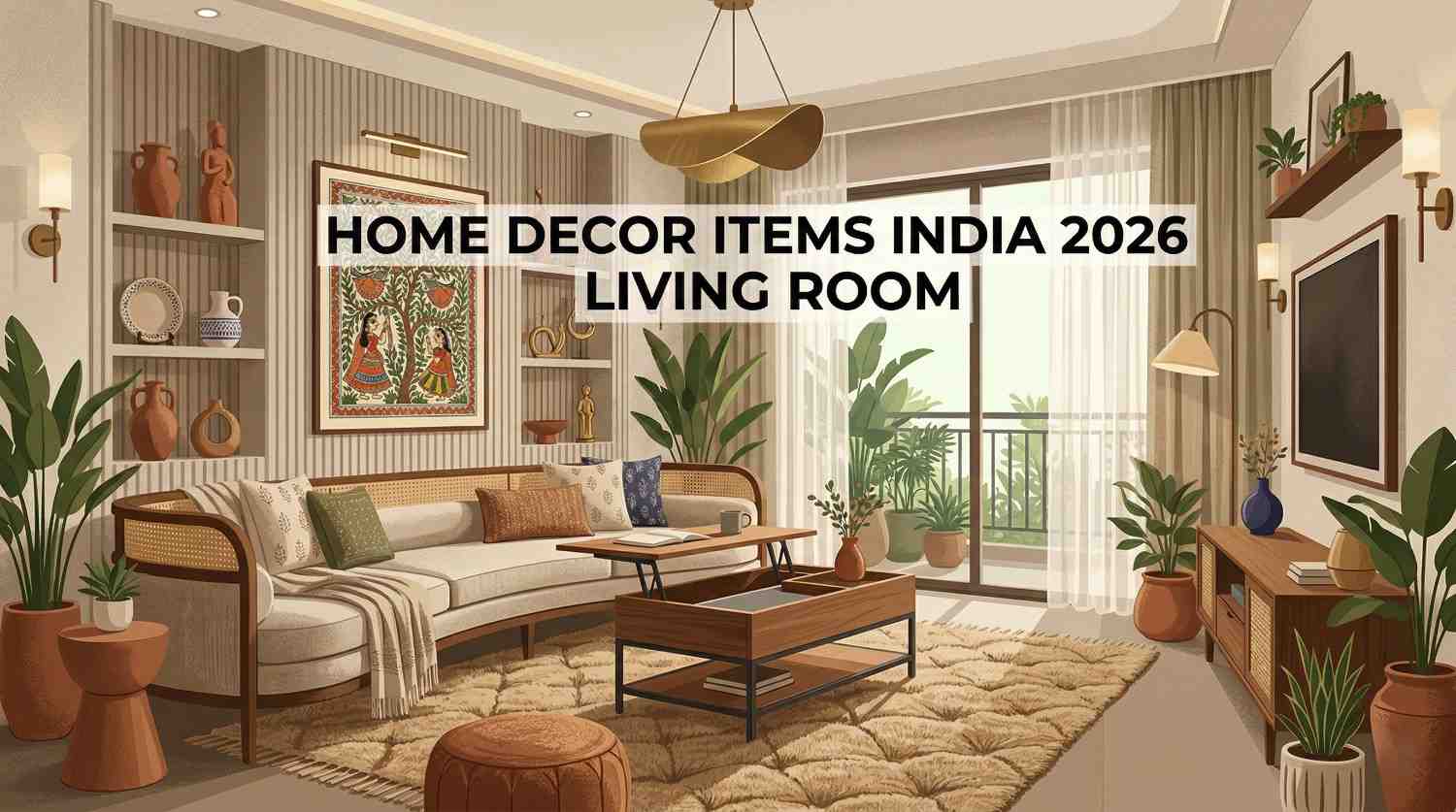
Home decor items in India have never been more exciting, or more overwhelming. Whether you have just moved into your first rented apartment in Bengaluru, bought a new flat in Pune, or are finally giving your family home in Lucknow the makeover it deserves, the choices in 2026 are endless, and the trends are evolving faster than ever.
I have spent years tracking what actually works in Indian homes, not just what looks beautiful on Instagram reels, but what survives in real Indian households, through changing seasons and budgets. This guide pulls everything together. I will walk you through the best home decor items available in India right now, what is trending, what is worth spending on, and what you should skip entirely.
By the time you finish reading this, you will not need to visit another website for advice.
Quick Facts: India’s Home Decor Market at a Glance
| Fact | Data |
| India Home Decor Market Value (2025) | USD 26.88 Billion |
| Projected Market Size (2034) | USD 42.36 Billion |
| Market CAGR (2026–2034) | 5.18% |
| India’s Global Export Rank | 2nd Largest Exporter |
| Top Category by Sales | Home Furniture (40.12% share) |
| Top Inspiration Platform | Pinterest (85% of decor projects start here) |
| Top Trending Colors 2026 | Terracotta, Olive Green, Deep Teal |
| Top Eco Materials | Bamboo, Jute, Recycled Wood |
Sources: IMARC Group, IBEF, Business Research Insights, 2025–2026
What Counts as a Home Decor Item (And Why It Matters in 2026)
Home decor is not just a vase on a shelf or a painting on a wall. It is every object, texture, colour, and surface that shapes how a room feels when you walk into it. In India, the category ranges from a handwoven Rajasthani dhurrie priced at ₹800 to a custom brass chandelier costing ₹80,000.
The categories include:
- Furniture: Sofas, beds, dining tables, storage units, console tables
- Soft Furnishings: Curtains, cushions, bed linen, throws, rugs, and dhurries
- Lighting: Pendant lights, floor lamps, wall sconces, fairy lights, diyas
- Wall Decor: Mirrors, art prints, macrame hangings, shelves, tapestries
- Tabletop and Accent Pieces: Vases, trays, candles, figurines, plant pots
- Plants and Biophilic Elements: Indoor plants, planters, terrariums
- Functional Decor: Coat racks, book stands, spoon holders, fruit baskets
In my experience, the biggest mistake Indian shoppers make is buying items in isolation. A beautiful brass lamp in the wrong corner of a room does nothing. Decor works as a system, not as individual purchases. Understanding what category serves what purpose in each room is the first real step.
The 8 Best Home Decor Items for Indian Homes in 2026
1. Brass and Copper Accent Pieces
Nothing transforms a modern Indian flat faster than brass. In 2026, brass is the metal of the moment. Candle holders, fruit bowls, tissue holders, photo frames, and wall hooks in brass or antique copper are selling out across platforms like Pepperfry, Amazon India, and independent artisan stores.
I tested a brass Mor trivet (peacock design) in my own dining space and received more compliments on that single ₹1,200 piece than on any furniture I own. The warm gold tones pair beautifully with terracotta, olive green, and off-white walls, all the colours trending in Indian homes right now.
Price range: ₹400-₹5,000 for accent pieces.
2. Handcrafted Textiles and Cushion Covers
Indian textile craftsmanship is world-class, and 2026 buyers are finally paying attention. Block-printed cushion covers from Jaipur, Kantha quilts from West Bengal, and Ikat weaves from Odisha are not only beautiful but also support local artisans.
I keep rotating my cushion covers seasonally, it is the cheapest and most impactful way to refresh a living room. A set of six Jaipur block-print covers from a local artisan platform costs around ₹600 to ₹1,500 and completely changes the mood of a sofa.
Price range: ₹150 to ₹2,000 per cover.
3. Indoor Plants and Artisan Planters
Biophilic design, the concept of bringing nature indoors, has moved from a niche trend to mainstream. Areca palms, snake plants, pothos, and peace lilies are the four most recommended indoor plants for Indian apartments in 2026. They clean the air, thrive in filtered light, and look stunning in ceramic and terracotta pots.
The “What Others Miss” insight: Most decor guides tell you to buy plants. What they miss is the planter. A beautiful Areca palm in a plastic nursery pot looks terrible. Pair every plant with a handmade terracotta or painted ceramic planter, and the difference is dramatic.
Price range: ₹200 to ₹2,500 for plant-and-planter combos.
4. Statement Mirrors
A large mirror is the oldest trick in interior design, and it still works. Mirrors make small rooms feel larger, reflect natural light, and serve as statement pieces. Arch-shaped, rattan-framed, and antique gold-bordered mirrors are the three most popular styles in Indian homes in 2026.
For a 1BHK or 2BHK flat, I recommend one statement mirror in the living room, ideally positioned to reflect a window or a source of warm light.
Price range: ₹800 to ₹12,000.
5. Woven Rugs and Dhurries
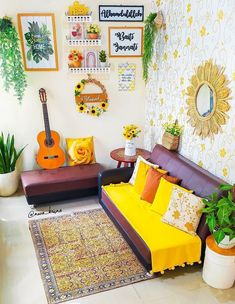
Nothing grounds a living room like a rug. In Indian homes, dhurries have a centuries-old cultural history, and in 2026, they are having a serious design moment. Flatweave cotton dhurries in earthy tones and geometric patterns sit naturally in both modern and traditional settings.
I use a handwoven cotton dhurrie in my study. Beyond aesthetics, it defines the seating zone in an open-plan room, which is a practical interior design technique that many Indian homeowners overlook.
Price range: ₹500 to ₹8,000 depending on size and material.
6. Wall Art and Prints
Plain walls are going extinct in well-decorated Indian homes. In 2026, the most popular wall decor choices include:
- Botanical art prints in minimalist frames
- Madhubani and Warli-inspired digital prints
- Macrame wall hangings in natural cotton
- Geometric metal wall art in black or gold
I personally prefer framed art prints over canvas reproductions, they are sharper, cheaper, and easier to swap when you want a change. A gallery wall with three to five prints can be put together for under ₹2,000.
Price range: ₹200 to ₹6,000.
7. Scented Candles and Diyas
Sensory decor, decor that engages smell and not just sight, is a growing category in India. Premium soy wax candles with fragrances like sandalwood, jasmine, and vetiver are selling well across D2C brands. During Diwali and wedding season, this category sees demand spikes of 300% or more on e-commerce platforms.
Beyond aesthetics, scented candles create an atmosphere that no other decor item can match. A ₹350 candle on a brass tray transforms a dining table into a dinner experience.
Price range: ₹200 to ₹2,500.
8. Multifunctional and Space-Saving Furniture
This is the category with the highest growth trajectory in 2026. Indian apartments are shrinking, research by the IMARC Group found a 20% decline in average apartment sizes in the Mumbai Metro Region over recent years. Foldable dining tables, nesting side tables, sofa-cum-beds, and ottomans with storage are no longer “compromise” options. They are smart design choices.
I switched to a set of nesting tables in my living room two years ago and have not looked back. They serve as a coffee table when I want one, as separate side tables when guests arrive, and as flat storage when I need floor space.
Price range: ₹2,000 to ₹25,000.
► MY POV: I have noticed that most Indian shoppers, especially first-time buyers, spend their budget on large furniture and then have nothing left for the finishing touches. This is a mistake. In my experience, ₹5,000 spent on the right cushions, a mirror, and two plants does more for a room than ₹20,000 spent on an average sofa upgrade. Start small, layer thoughtfully.
Home Decor Trends in India 2026: What Is Actually Hot Right Now
The Quiet Luxury Movement
Loud, maximalist decor dominated Indian homes for years. In 2026, the shift is toward what designers call “quiet luxury.” Think soft clay tones, muted olive, sand, and chalky whites. Fewer objects, but each chosen with care. This is not minimalism, it is deliberate restraint.
Sustainable and Artisan-First Shopping
The “Made in India” movement has reshaped the home decor market. Platforms promoting local artisans are now a primary discovery channel for buyers who want pieces that tell a story. Bamboo furniture, recycled glass decor, and clay planters are replacing synthetic alternatives across urban homes.
Biophilic Design Goes Mainstream
What was once a luxury interior design philosophy has become a mass-market trend. Vertical green walls, balcony garden setups, and carefully arranged indoor plant corners are appearing in 1BHK flats across Mumbai, Delhi, and Hyderabad. The cost barrier has dropped significantly, a curated plant corner can be set up for under ₹1,500.
Retro Meets Contemporary
Vintage furniture, bold patterns, and sentimental pieces, combined with clean modern lines, define the eclectic style dominating social media feeds in 2026. A rattan chair next to a sleek concrete wall, or an antique wooden sideboard under a Scandinavian pendant light, these juxtapositions are intentional and highly effective.
Home Decor Items by Budget: Where to Spend in India
| Budget Range | Best Investment |
| Under ₹1,000 | Cushion covers, candles, plants, small planters |
| ₹1,000 to ₹5,000 | Mirrors, rugs, wall art sets, brass accents |
| ₹5,000 to ₹15,000 | Statement lighting, quality curtains, large rugs |
| ₹15,000 to ₹50,000 | Accent furniture, sofa upgrades, handcrafted storage |
| ₹50,000+ | Custom furniture, designer lighting, luxury textiles |
India-Specific Angle: Regional Decor Traditions Worth Knowing
India does not have one decor tradition, it has dozens. And in 2026, the most thoughtful interiors are drawing from these regional vocabularies rather than copying generic global trends.
Rajasthan: Famous for blue pottery, hand-block printing, and mirror embroidery (shisha work). A single Rajasthani blue pottery vase is a statement piece that works in both modern and traditional homes.
Bihar and Jharkhand: Madhubani paintings and Dokra metal craft, both now available as framed prints or original artworks, bring cultural depth to any wall.
Kerala: Rosewood and teak wood craftsmanship produce some of the finest carved furniture in Asia. Kerala-style wooden furniture is sturdy, beautiful, and an investment that holds value.
Uttar Pradesh: Brassware from Moradabad (known as the “Brass City of India”) is some of the finest in the world. Buying directly from UP artisan cooperatives can get you museum-quality pieces at a fraction of retail prices.
What Others Miss: Most national decor guides talk about Rajasthan and Kerala but ignore the extraordinary craft traditions of the Northeast, particularly Nagaland (warrior-inspired tribal textiles) and Manipur (handwoven Moirang Phee fabric). These are genuinely rare and conversation-starting pieces that no mass-market store carries.
► MY POV: My most prized home decor item is a Madhubani painting I bought directly from a Bihar artisan cooperative for ₹1,800. It sits in my living room, and every guest asks about it. No mass-produced decor item I have bought at any price has generated that reaction. If I could give one piece of advice to any Indian home decor buyer, it would be this: buy one piece of authentic Indian craft before buying anything imported or mass-produced.
Where to Buy Home Decor Items in India: Online vs Offline
Online Platforms
| Platform | Best For | Price Range |
| Pepperfry | Furniture and large decor | Mid to premium |
| Amazon India | Everything; great for comparison | Budget to mid |
| Nykaa Fashion Home | Soft furnishings, textiles | Budget to mid |
| Jaypore | Artisan and craft-based decor | Mid to premium |
| The Artisan | Handcrafted, sustainable pieces | Mid to premium |
| Flipkart | Budget-friendly mass-market | Budget |
| Etsy India | Unique, handmade, one-of-a-kind | Varies |
Offline Shopping
Physical stores give you the critical advantage of touching a fabric, testing the weight of a vase, or sitting on a chair before buying. IKEA stores in Mumbai, Bengaluru, Hyderabad, and Navi Mumbai offer AR-powered visualisation. Local markets like Sarojini Nagar (Delhi), Commercial Street (Bengaluru), and Colaba Causeway (Mumbai) remain the best places for budget finds.
Common Mistakes Indian Home Decor Shoppers Make
Mistake 1: Buying everything in one go. Decorating a home takes time. Rushing leads to mismatched pieces. I recommend decorating one room completely before moving to the next.
Mistake 2: Ignoring scale. A tiny wall art print on a large wall looks lost. A giant sofa in a small room feels suffocating. Always measure your walls and floor space before buying.
Mistake 3: Copying Pinterest boards without adapting for Indian conditions. Western decor often features light flooding through large windows. Most Indian apartments get limited natural light. What works in a Scandinavian home may not translate to a Mumbai flat.
Mistake 4: Neglecting lighting. The most common feedback I get from people who feel their home “still doesn’t look right” after decorating is that they have only ceiling lights. Layered lighting, ceiling, floor, and table lamps, transforms any room. This single change is worth more than any new piece of furniture.
Mistake 5: Choosing trend over personal style. Terracotta is trending. But if you genuinely love cool blues and greys, a terracotta palette will feel wrong to you in six months. Trends inform; they should not dictate.
Mistake 6: Forgetting maintenance. Brass tarnishes. White linen shows stains. Rattan breaks in high-humidity areas. Always ask about maintenance before buying a statement piece.
Key Takeaways
- India’s home decor market is growing at 5.18% CAGR and will reach USD 42.36 billion by 2034, the quality and variety of products available is only going to improve.
- The best bang-for-buck home decor items in India are: cushion covers, indoor plants with ceramic planters, statement mirrors, handcrafted textiles, and brass accent pieces.
- The 2026 trend direction is clear: earthy colours, sustainable materials, artisan craftsmanship, and quiet luxury over maximalist accumulation.
- Regional Indian crafts, from Moradabad brass to Madhubani painting to Kerala woodwork, offer unmatched quality and originality at prices that mass-market retail cannot touch.
- For small apartments, multifunctional furniture is not a compromise, it is the smart choice.
- Always layer your lighting. Always measure before buying. Always buy one authentic craft piece.
Conclusion
Home decor items in India in 2026 sit at a genuinely exciting intersection: a booming domestic market, extraordinary traditional craft heritage, and a new generation of buyers who care as much about story and sustainability as they do about style. Whether your budget is ₹500 or ₹5,00,000, there is no shortage of beautiful, meaningful choices.
My advice is always the same: buy less, buy better, and buy with intention. One hand-thrown ceramic bowl on a clean shelf says more than thirty cheap decorative objects grouped together. One authentic Madhubani painting says more than a wall covered in generic prints.
This market will grow. The trends will keep shifting. But a home decor item that genuinely reflects who you are and where you come from never goes out of style.
Frequently Asked Questions About Home Decor Items in India
Q1: Which home decor items are best for a small 1BHK apartment in India?
For a small 1BHK, I recommend prioritising multifunctional furniture (nesting tables, sofa-with-storage), large mirrors to expand visual space, light-colored textiles, a small indoor plant corner, and wall decor that draws the eye upward. Avoid oversized furniture and cluttering tabletops.
Q2: What are the most affordable home decor items that make a big difference?
In my experience, the highest-impact budget items are cushion covers (₹150 to ₹400 each), scented candles (₹200 to ₹500), small indoor plants in ceramic pots (₹300 to ₹800), and framed art prints (₹200 to ₹600). Combined, these four categories can transform a room for under ₹3,000.
Q3: Where can I find authentic handmade home decor items in India?
Platforms like Jaypore, The Crafts Council of India, and state government emporiums (like Rajasthan’s Rajasthali or UP’s Gangotri) are excellent sources. Local artisan markets and government craft fairs (like Dilli Haat in Delhi) also offer genuine, certified handmade products.
Q4: Are eco-friendly home decor items worth the extra cost?
Yes, in most cases. Bamboo, jute, recycled glass, and natural cotton products are not just sustainable, they are often more durable than their synthetic counterparts and age more gracefully. The price premium is usually 10–25%, which I consider worthwhile for long-lasting pieces.
Q5: What home decor items are trending for Diwali 2026?
Brass diyas and lanterns, scented candles, Rangoli stencils and decor sets, traditional torans (door hangings) in silk and cotton, and decorative brass thali sets are the perennial Diwali favourites. In 2026, sustainable LED string lights and hand-painted clay lamps are gaining strong traction.
Q6: How do I choose a colour palette for my Indian home?
Start with your largest fixed surface, usually your walls or flooring. Build the palette from there. In 2026, earthy base tones (terracotta, clay, sand) work brilliantly with both warm metal accents (brass, copper) and cool organic textures (jute, linen, bamboo). Avoid choosing colours from a single shopping session; live with paint samples for three to four days before committing.
Q7: Which Indian states are best known for home decor craftsmanship?
Rajasthan leads for pottery, block printing, and lacquerware. Uttar Pradesh (particularly Moradabad and Saharanpur) is famous for brassware and woodcraft. Kerala and Karnataka produce excellent teak and rosewood furniture. West Bengal is known for Kantha and Dokra work. Odisha and Gujarat are celebrated for handwoven textiles.